
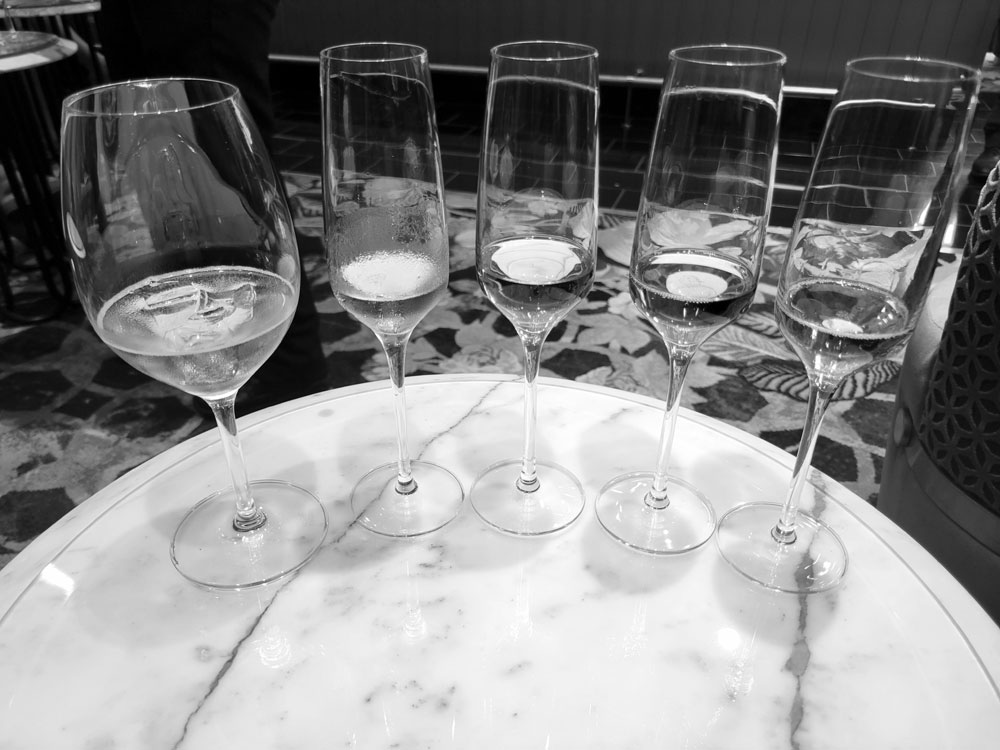
Much like a previous article about wine, champagne is another one of those adult beverages I know next to nothing about. While booking activities for my last Disney Cruise, I saw Champagne Tasting and thought “why not?”
I think I’ve only had champagne twice in my life. It’s not exactly an every day drink. Also, I don’t attend many weddings. After taking this class, though, I did learn a few things about champagne, and I even found one I enjoyed!
Fun fact: to be legally called champagne, the wine must be produced in the Champagne region of France. This is taken so seriously, lawsuits have been filed over a casual misuse of the word ‘champagne’ in product labeling.

Champagne Tasting Details
The Champagne Tasting class that I attended, on the Disney Wish, was held in Nightingale’s (again). This will be the third tasting I’ve had at this lounge, but I digress. During the class, you will sample 5 different champagnes and learn a few things along the way. The class itself is one hour and the cost, as of this writing, is $70.
Fun fact: Champagne is a blended wine. This means that several grape varieties can be used to make it, bringing their own personal touch to the mix. The most commonly used varieties in the designation are Chardonnay, Pinot Noir and Meunier. What percentages of these grapes in the final product is what gives each brand it’s own distinct flavor and taste.
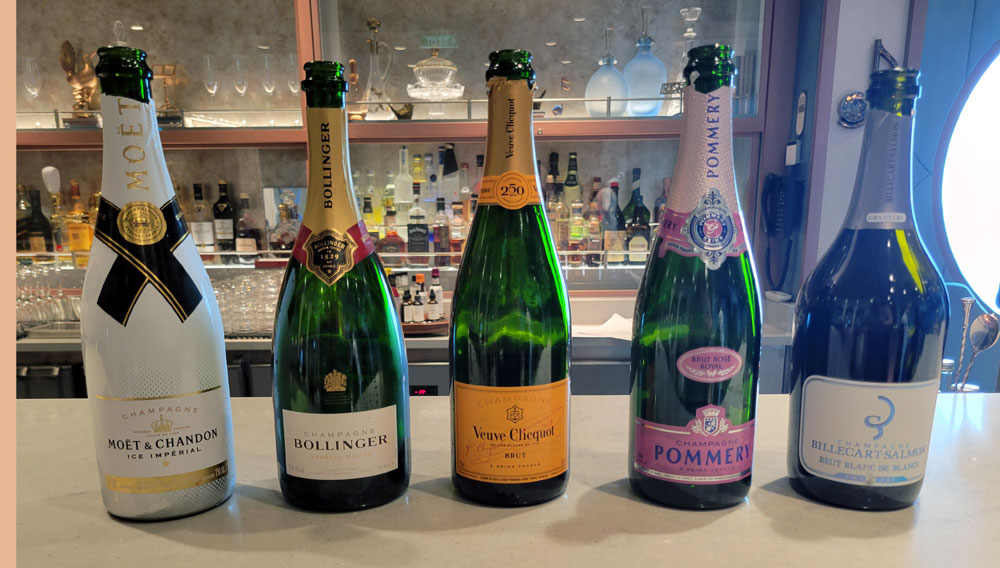
Champagne Number 1: Billecart Salmon Brut Blanc Des Blancs
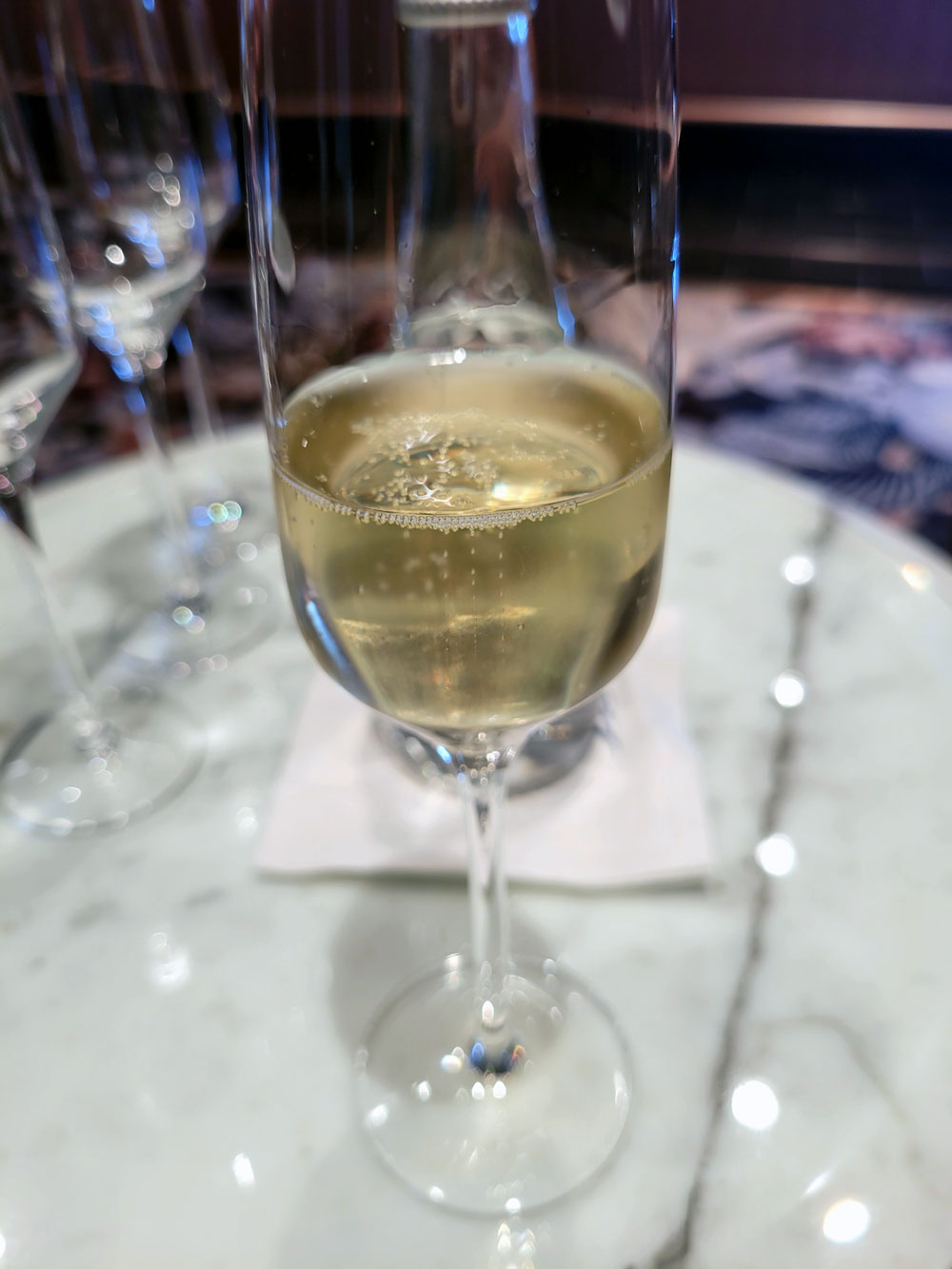
This is probably what most people think of when they think of champagne. This particular champagne is 100% Chardonnay grapes. The tiny bubbles are an essential aspect of champagne, and one of the first things to look for when trying a glass. On the ship, this champagne typically goes for $130/bottle, or $22/glass. Fancy!
Champagne Number 2: Pommery Brut Rosé Royal
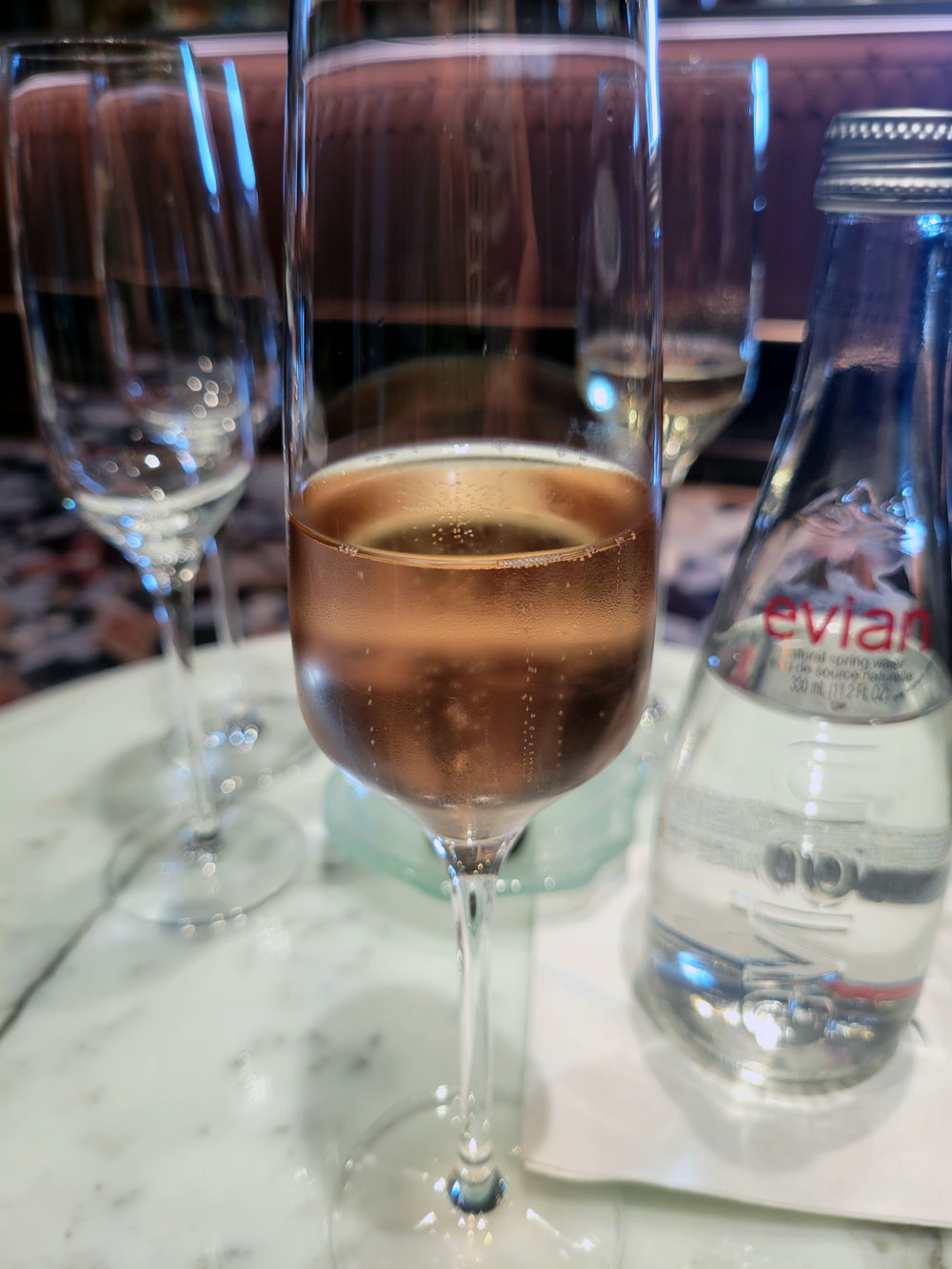
Ah! Just when I thought all of these would look the same, I’m surprised with a rosé from Pommery that is a mix of red and white grapes. This particular champagne had a drier flavor compared to the previous one; not exactly something I care for. While researching for this article, I was able to find blend percentages of other brands, however this one must be a closely guarded secret.
Champagne Number 3: Veuve Clicquot Brut

This champagne is comprised of 55% Pinot Noir grapes, 15% Pinot Meunier, and 30% Chardonnay. It’s also aged for 3 years! “It is pleasing to the nose; initially reminiscent of yellow and white fruits, then of vanilla and later brioche” according to their website and people who know way more about this than I do. Fun fact: this particular brand was founded in 1772!
Champagne Number 4: Bollinger Brut Special Cuvee

Bollinger is the preferred champagne of James Bond, I’ll have you know. Flavors of pear, brioche and spicy aromas, notes of fresh walnut. As mentioned earlier how champagne can be different blends of three kinds of grapes, this brand is no exception with it’s 60/25/15% pinot noir/chardonnay/pinot meunier blend.
Champagne Number 5: Moet & Chandon Ice Imperial
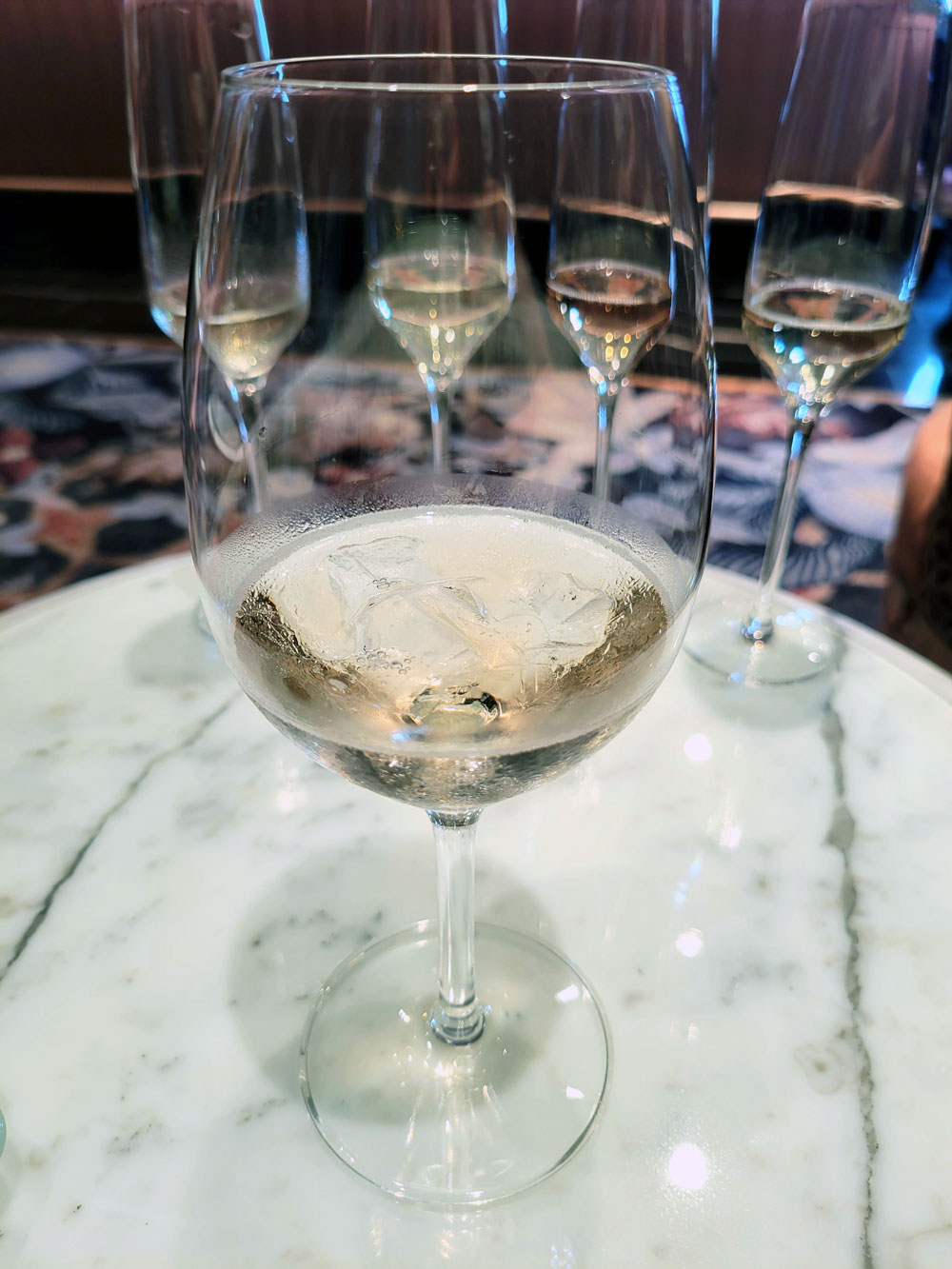
Excuse me, there’s ice in my champagne. Oh, it’s supposed to be there? No kidding! No kidding, indeed. Moet & Chandon Ice Imperial is meant to be served over ice. Much to my surprise, this is the champagne I enjoyed the most. I think it’s also the cheapest of the five sampled.
Here are all the bottles.
In the class, we also observed the proper technique to open a bottle of champagne. First, it must be chilled, that’s important. Next, while pointing the bottle away from everyone, unwrap the top and undo the metal cage holding the cork. Then, grip the top of the bottle with your non-dominant hand, placing your thumb over the cork. Finally, slowly and carefully turn the bottle left and right with your other hand until you hear the popping sound.
This method prevents the cork from flying out and hitting anything or anyone. It also reduces the amount foam created from a buildup of pressure since you’re not shaking it. The more you know!
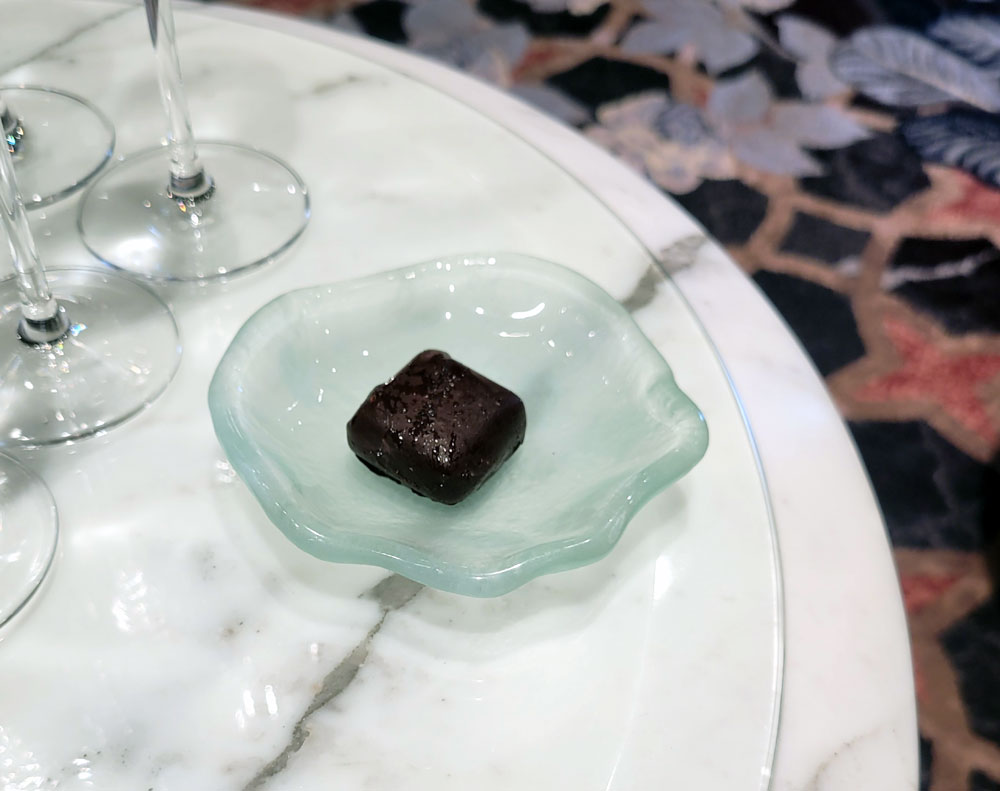
As part of the class, we were also given a chocolate to try with the champagnes. I don’t remember much about it and I think everyone saved it for last.
Wrap it up, Liz.
Was the Champagne Tasting class worth it? For a one-time experience of something I have little knowledge of, yes, I thought it was worth it. It’s a class I don’t feel I need to do again, though. I did learn that not all champagnes are the same, and there was one that I can reach for when I want to celebrate. Like celebrating that I’ve finished writing this article!
 Disney Rover